Episode Transcript
[00:00:00] Speaker A: This podcast is brought to you by MHA of Dutchess county and produced by CMJW Entertainment.
This episode of the Vital Women Podcast is proudly sponsored by Salt Boutique Labs.
You're listening to the Vital Women Podcast.
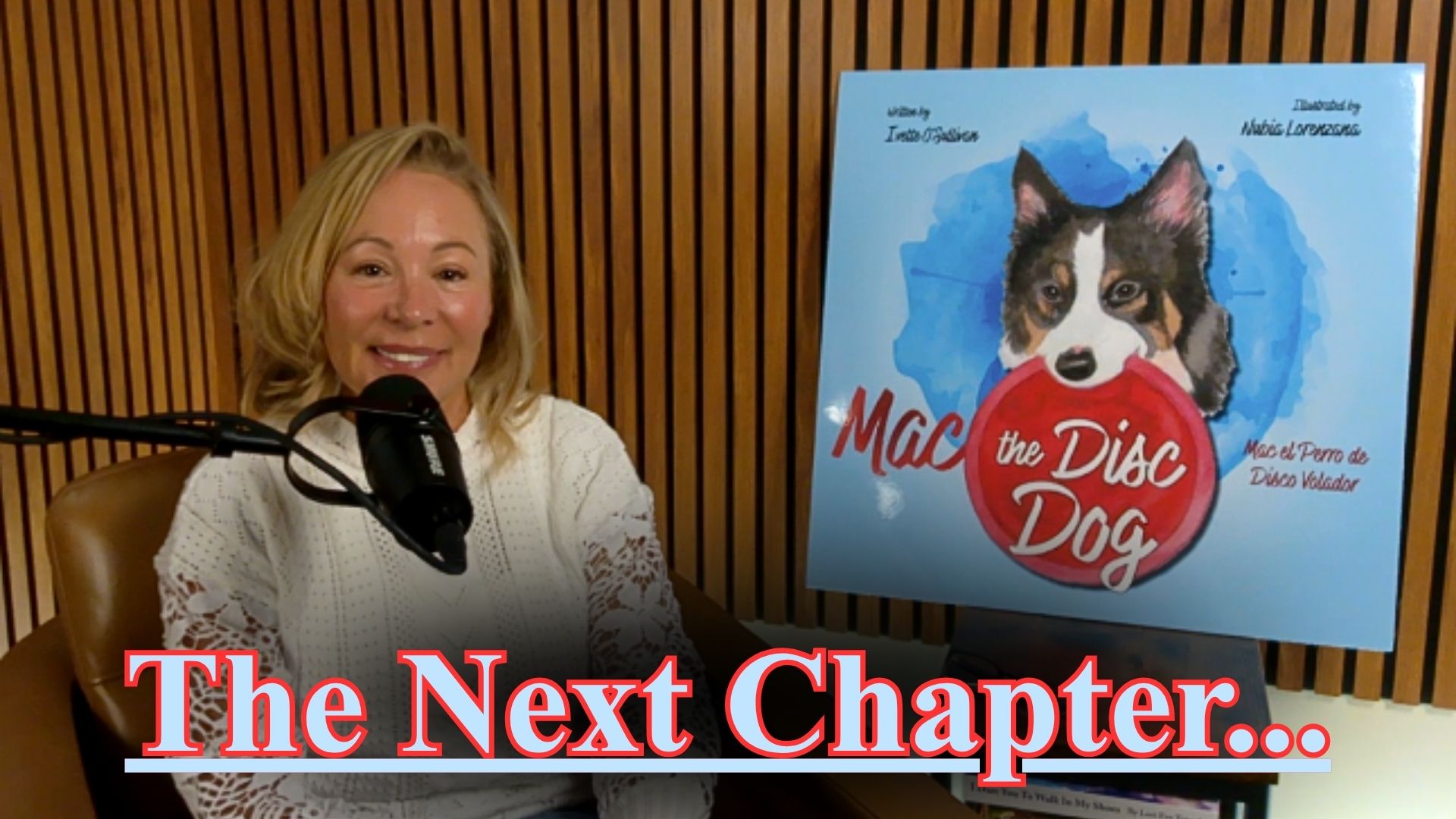
[00:00:17] Speaker B: Hello everyone. Welcome back to the Vital Women. I am your host, Yvette o'. Sullivan. As you know, this space is all about empowerment and midlife vitality. But today's episode's a little different. It's a heart to heart about where we are going next. My 25 years in social work have always been about one thing, helping people find their voice. I've realized that to empower women, we also have to empower the children they are raising. We have to start the conversation about grit and self discovery early. Because of this mission, I have decided to put the podcast on pause. I need to give 100% of my energy to a project that has been in my heart for a long time. My new bilingual children's book in English and Spanish, Mack the Disc Dog. Mac isn't just a dog. He is a border collie. He's a teacher. In this book, he goes on a journey to find out who he is. He discovers a sport he loves, but he has to use grit to get good at it. This can also be used as a social emotional learning tool. As a social worker, I know that kids ages 4 to 8 need to see themselves in stories. By making it bilingual, I'm making sure more families can sit down together and talk about resilience and identity. If you ever felt like you had to reinvent yourself, which is what we have talked about on some episodes, then you'll understand why this book matters. I'm taking Mac on the road. I'll be promoting the book to make sure kids know that their identity is shaped by their perseverance and passion. To do this right, I need to give all of my energy to launch the book. This June. I have to step back from the mic for now.
Being a vital woman means knowing where to focus your energy and the fire to do the things that you are passionate about. I ask you to follow the journey on social media platforms.
Even though the episodes are pausing, the mission isn't. You can follow Mac's journey and my book tour once all the logistics are set up.
[00:02:23] Speaker A: Hey everybody. So, as you just heard, Yvette has a new book coming out. So to learn more about the book and kind of kickstart this new campaign that she's doing, I'm going to get a chance to interview her right now about this book and how it came to be and what people can expect. So, Yvette, first of all, love this design. I absolutely love this. Do we want to give a shout out to the illustrator who put this together?
[00:02:43] Speaker B: Yes, I want to give a shout out to my wonderful illustrator, Nuvia. She is a young lady who has always had a passion for drawing.
And when I went to her with the idea, she was so excited to work on the illustrations for the book.
[00:02:59] Speaker A: No, it's terrific. It looks fantastic. And this is very near and dear to your heart. This is not like this is some. You're pulling this out of nowhere kind of concept for the book. This is something that's very personal to you. So tell us where this all came from to write this.
[00:03:13] Speaker B: Well, first of all, I've always wanted to write a book since I was in my 20s. When I left college, I.
That's when I first got the idea. I never got around to writing because life happens. I got married, became a mother, focused on my career, and as you and I have talked in the past, you know, recently, I'm working on my creativity. Therefore, when Covid happened, that's when I decided to pivot in life and develop my creative side.
So during COVID that's when I acquire my dog, Mac. And he's a border collie. It's a very interesting story of who he has become today, because we picked him up on a farm in New York State. And not any ordinary farm. It was a farm that belonged to my daughter.
He is one of 11 pups, and he was not selected.
So it's interesting because people may think that dogs don't have feelings or that dogs don't expect what they're going through.
[00:04:22] Speaker A: They certainly do.
[00:04:24] Speaker B: So through my observation during this period, I noticed that he was kind of sad that he was left behind. And I believe one of the reasons that he was left behind was because he was small. And border collies by nature are raised to be working dogs. So the area where my daughter had the farm is very populated by Amish population.
And they saw that the bigger pups, the maybe stronger pups would be better working dogs for them.
Well, Mac worked his way into our lives. I have changed the story a little bit for the purpose of children understanding.
And in doing that, I'm sharing how he became a very resilient dog, developed grit, persevered in becoming the dog that he is today, because he's not.
He's not a herding dog, even though that's his nature, but he has developed a passion for playing disc, and he competes and in the first competition that we enrolled him in, he won first prize.
[00:05:35] Speaker A: Amazing.
[00:05:36] Speaker B: Which we were totally surprised because we weren't expecting that.
So in order for parents and children to get a better idea of his journey, which it has not been an easy journey, you need to buy the book when it's released in June. But talking about, you know, passion, it is a passion of mine to create a voice, and not only, you know, for women, as I've been doing for the last year, but also for children. Because when I first became a social worker, many, many years ago, I started working with children, and especially post Covid, I think a lot of children are going through certain uncertainty, certain nervousness, maybe not knowing what's going to happen next because the world has changed so much, and there's always something happening. So I hope by writing this book that I can bring some comfort to them.
[00:06:36] Speaker A: I hope so. And more than likely, you can. Something like this. And besides, there's a reason why dogs are very often used as therapy animals. Because there's a beautiful connection between a child and not just a child, just a person and a dog. And it's a beautiful thing. And the relationship that you have with Mac, I remember the first time I came over to your house and we were, you know, throwing the disc around, and it was so much fun. It was so sweet. And just to have, like, that playful sense in that moment could tell. First of all, Mac's very talented, but also the connection that you two share and how phenomenal that is.
[00:07:06] Speaker B: So.
[00:07:06] Speaker A: So, you know, to be able to go out there and to compete, but also to build up the skill together, how does that feel? Like that unites you even more?
[00:07:16] Speaker B: Well, for clarification, I'm not his handler.
[00:07:18] Speaker A: Oh, okay.
[00:07:19] Speaker B: My husband is his handler. My husband is the one that does the training with him.
So the bond that they have developed is very close. But in speaking of how calming dogs are and the fun, the play that it brings, it also gets me out there, you know, to attempt because I'm not good at throwing the disc.
I don't have that control that my husband does with the wind and knowing. And also as a dog, Mac has this eye coordination, and also he uses sound to kind of determine where the disc is going to land. So they have been working on those skills for quite some time, for the last four years now.
But as for me, I have a very close bond with him because he comes to me in the evening, he looks for me, you know, for hugs and kisses. And in the evening, I toss his favorite Animal, which is a manatee, a stuffed manatee. Manatee and his bear. So that's where Arbonne has grown. And in walking also, you know, during COVID I was also a little nervous and anxious, and he gave me the confidence to walk with him, that security that I needed. Talking about therapy dogs and talking about, you know, the comfort that animals can bring.
We also have that special bond.
[00:08:35] Speaker A: Yeah, that's lovely. The fact that.
So this begs the question, did you have many dogs in your life prior to Mac?
[00:08:42] Speaker B: Actually, he is our first dog.
[00:08:44] Speaker A: That's what I thought, but yeah.
[00:08:45] Speaker B: Yes. When my children were growing up, they always wanted a dog. And I've always said, we're not getting a dog. We're way too busy. Between sports and work and every other responsibility as parents, I never allowed.
So as I mentioned earlier, when my daughter had her own farm, she became independent, and she was like, I'm going to get that dog that you told me I could not get. Well, she sure did. And her dog ended up having 11 pups.
[00:09:15] Speaker A: Yep. And now, you know, Mac is in your life and, like, look, now it was your daughter who got you, Mac, this beautiful dog and this beautiful connection, another part of your family, another beautiful addition of the family.
[00:09:27] Speaker B: Another beautiful addition of our family. And, you know, every day we have to exercise him, we have to work with him, because they're so smart that if they don't have a job, they. They can go through anxiety and depression. That's the unique part about border collies, that they are super intelligent. And in the dog world, it's not coming from me. In the dog world, they are considered the prodigy dog.
So it is a joy to have him in. In our lives.
[00:09:58] Speaker A: That's lovely. So now you're going out and about taking your book on the road. You want to promote it, you want to share this story with people. As you mentioned before the podcast, we're taking a pause on this.
What's it been like for you to create this platform for a year and now to. Again, not to end this, but to pivot it and use your energy in a new creative outlet? What has what you've done in the past year influenced and strengthened you into this next chapter?
[00:10:25] Speaker B: Great question. Well, what. Prior to the podcast, I started to write the book, and when I started the podcast, I was in the midst of working with the illustrator.
But one thing that the podcast has done for me is also I've developed grit and perseverance to try different endeavors to lose that fear and accept that I don't have to do things in life one particular way.
And even though that I am walking into the unknown, just like I did with the podcast, I'm going to get through it. And I am open and feel blessed to have all these opportunities because maybe some times people don't get to do or work on what they're passionate in.
[00:11:13] Speaker A: Yeah, it's tough at times. And as you said, there's not just one way of going about and doing things. I've probably shared this quote with you before, and sorry if I'm a broken record, but jazz violinist Regina Carter, I was at a Q and A with her and she said something I always remember, and it's so simple. There are many ways around a roadblock. You just got to get. Got to get out and get stepping and figure it out for yourself.
[00:11:35] Speaker B: Absolutely. You know, and I've had several guests on the podcast and they have talked about their life stories and different ways that they have been resilient to be who they are today.
So that also has helped me to give me that bravery.
[00:11:50] Speaker A: Yeah.
[00:11:51] Speaker B: Because I feel sometimes, you know, women in midlife, we start to question and we may develop fear and may not push ourselves to do certain things. So one thing that I have learned from having all of my guests and the challenges that they gone through is just keep going, keep going.
[00:12:11] Speaker A: Yeah.
[00:12:12] Speaker B: You know, you're. We're gonna figure it out. And that's what life is all about. And that's the beauty of it.
[00:12:17] Speaker A: There is a beauty to it. It is beautiful. And you're going out there and you're sharing that beauty and sharing that art. You've had a number of people who are authors on the show. Now you're going to be the author getting to promote it. How do you, how does that feel, to have the tables turn in that regard?
[00:12:32] Speaker B: Well, one is exciting and I can, you know, go to them and also we can support each other and see how it feels. Because it's not an easy journey. You know, maybe people think, oh, they're going to make millions. It's not about making millions. It's about getting the message out.
And a couple of my guests, they have been on the show, they have such an important message to give.
Just like my message is for children as well, but also parents, because in, like you said, it's about forming a bond. And not only forming a bond with animals, but with your children as well. Finding that time when you can sit down and just take that quiet moment in life and read and enjoy and have fun. So I believe it's the same with the authors that I've had on the show.
Finding that time and that passion for them to share their message and just put it out there.
[00:13:27] Speaker A: Beautiful. No, honestly, that's the way to go about it. So, one thing that's really interesting about this book, you're also reaching out to a bilingual audience, which is really neat because that was something that you're really trying to promote with the podcast of really highlighting the Spanish culture and the English culture and bringing it into one. You're doing the same thing with the book here. So how does that feel to get to expose, to express both backgrounds that are make you one, make you whole?
[00:13:54] Speaker B: Thank you for asking that question.
Yes, my background is also.
I am Dominican. And in embracing that background and also being a social worker, I found that there isn't enough material out there that is written in Spanish.
And in this country, I also feel that there's a big part of push for immigrants to learn to read and write and speak in English. But when they are home, they also need to feel safe and that they can speak in their own language and that they can read to their children in their own language in Spanish.
So, therefore, it was very important for me to write the book in English and Spanish to give that level of them, of people feeling safe in their own home.
[00:14:39] Speaker A: Yeah, without a doubt.
I always feel bad that I only know one language. Do I know some Spanish? Yes. Am I conversational at it? No. And I give anybody who is bilingual or multilingual so much credit. And I'm not somebody over here that saying, it's like, you have to learn English. I know English. You have to learn English. It's like, no. It's like, I want to learn more. And the fact that you have the variety here for everybody, it just makes it even more accessible to even more people. That's just opening the door for as many people as possible. And I think that's really lovely what you're doing there.
[00:15:15] Speaker B: Thank you. And, you know, sometimes also when children are exposed to English in school, they start to lose their native language. And I hope with this book that they start to feel also that they can continue to carry their native language and appreciate it. Because there was a point in my life where I did not appreciate knowing Spanish, really.
But as I mature and became an adult, you know, I was like, no, this is my mother's language. I need to hold onto it. And that's what I've done. And there are times, you know, as an adult that certain words do not come to me. In Spanish. But once again, it's about keeping that love for the language alive and refreshening my vocabulary once in a while. And that's what I did with writing the book, because it was a challenge writing it in Spanish as well. So I want to bring that to light.
Don't lose your Spanish native language.
[00:16:11] Speaker A: Yeah, it's something to be proud of. It's who you are, you know, each person. We are a culmination of all those who came before us and who will come after us. So, you know, having the pride in our culture, it's very important to do so. Being able to latch onto that with this book, I think that's a great approach.
[00:16:28] Speaker B: Thank you.
[00:16:30] Speaker A: So, you know, I think we've wrapped it up pretty well. Obviously, people are going to want to check this out. We're going to have updates on all of your social media and probably some new stuff coming out, too. So definitely be on the lookout for all of that.
Besides that, the way you typically end most of your episodes, when you're talking to your guests, you ask them, do they have a call to action for the audience? Yvette, do you have a call to action for everybody?
[00:16:52] Speaker B: Well, my call to action is, as I mentioned earlier, is the mission to nourish our children that are coming up in the world, to give them that sense of security, and it's everybody's responsibility.
You know the saying, it takes a village. Yes, it does take a village for children to develop that strength, to develop being brave, to develop a voice for themselves, the passion to demonstrate who they are and also to understand that it takes time and we need to support them in helping them find who they are. And I also ask my audience to do the same.
[00:17:29] Speaker A: What a great call to action right there. Yvette, it has been a pleasure working with you over this past year on this podcast, and I'm really excited where you can take this book, where you can take Mac and everything. This is going to be a great new chapter for you.
[00:17:39] Speaker B: It certainly is. Thank you.
[00:17:41] Speaker A: Absolutely.
[00:17:42] Speaker B: I want to give a huge thank you to my sponsors, Andrew o', Grady, the Salt Boutique Lab, Livia Medspot, for believing in me and giving me an opportunity to start this wonderful endeavor of the show. I want to thank my audience for supporting me and always listening. And if you have an opportunity, please make sure you check out Mental Health of America, that you check out the Salt Boutique Lab. And also Livia met Spot. Thank you for the community, and thank you to my producer, Connor Walsh, for always believing in me and supporting me with all my crazy ideas. What a huge learning curve it was for me to produce the podcast. Thank you to the audience.
Stay vital. I'm not going anywhere. I'm just turning the page to a new chapter.
[00:18:33] Speaker A: This podcast is brought to you by MHA of Dutchess county and produced by CMJW Entertainment. This episode of the Vital Women Podcast is proudly sponsored by Salt Boutique Labs.